
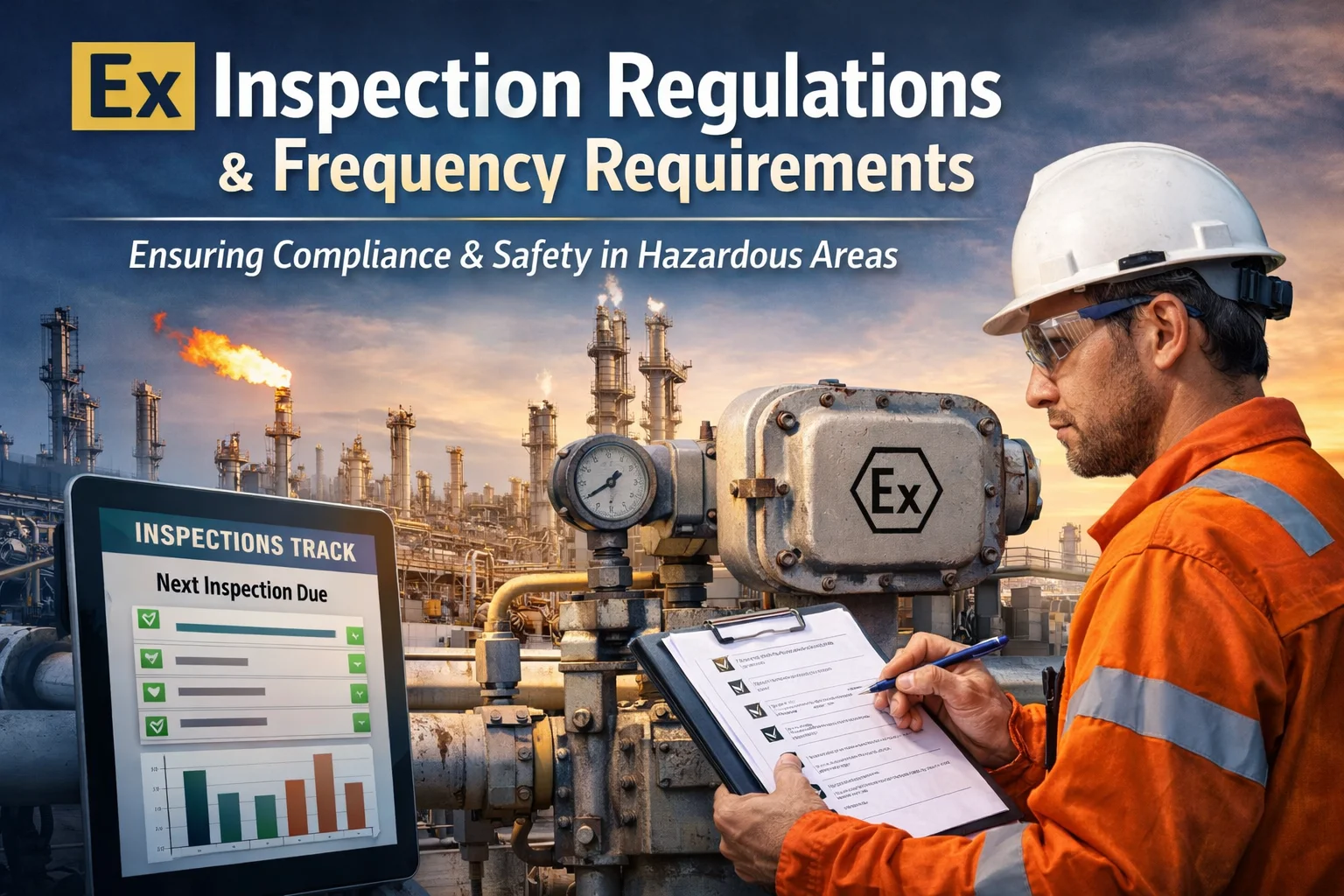
In hazardous environments such as oil and gas facilities, safety is not optional—it is regulated. Ex inspections (Explosion Protection Inspections) ensure that electrical and mechanical equipment installed in explosive atmospheres remains safe, compliant, and operational.
In this guide, you’ll learn Ex inspection regulations, frequency requirements, best practices, and how to streamline the process using digital tools like Inspections Track software.
Ex inspections refer to the systematic examination of equipment installed in hazardous (classified) areas where flammable gases, vapors, or dust may be present.
These inspections verify that:
Therefore, regular inspections are essential to prevent explosions, downtime, and regulatory penalties.
To maintain global safety standards, several international regulations define how Ex inspections must be conducted.
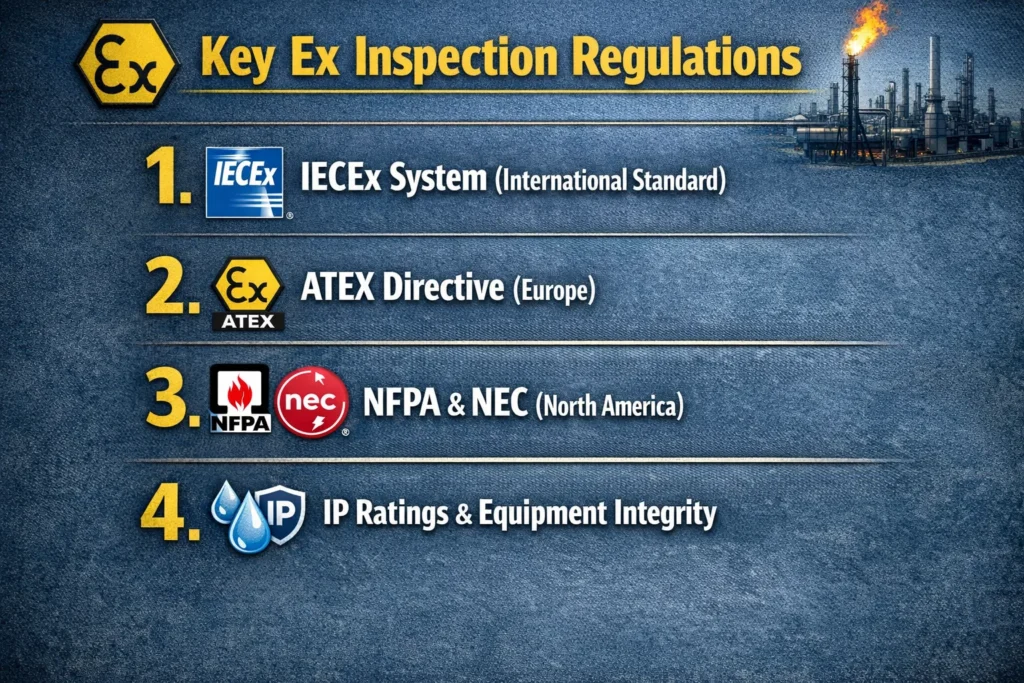
The IECEx Scheme provides a globally recognized framework for equipment certification and inspection.
The ATEX directive governs equipment used in explosive atmospheres within the EU.
In regions like the US:
In addition to explosion protection, equipment must meet Ingress Protection (IP) standards to prevent dust and moisture intrusion.
Ex inspections are categorized based on their depth and purpose.
Inspection frequency depends on equipment type, environment, and risk level. However, standards like IEC 60079-17 provide clear guidance.
| Inspection Type | Typical Frequency | Purpose |
|---|---|---|
| Visual Inspection | Every 6 to 12 months | Identify visible damage |
| Close Inspection | Every 12 to 24 months | Check internal components |
| Detailed Inspection | Every 3 to 5 years | Full compliance verification |
Although general guidelines exist, inspection intervals should be adjusted based on:
As a result, risk-based inspection planning is highly recommended.
Despite clear regulations, many companies struggle with:
Consequently, these issues can lead to safety risks and costly downtime.
To overcome these challenges, digital solutions like Inspections Track offer a smarter way to manage Ex inspections.
By implementing Inspections Track, organizations can:
To stay compliant and safe, follow these proven strategies:
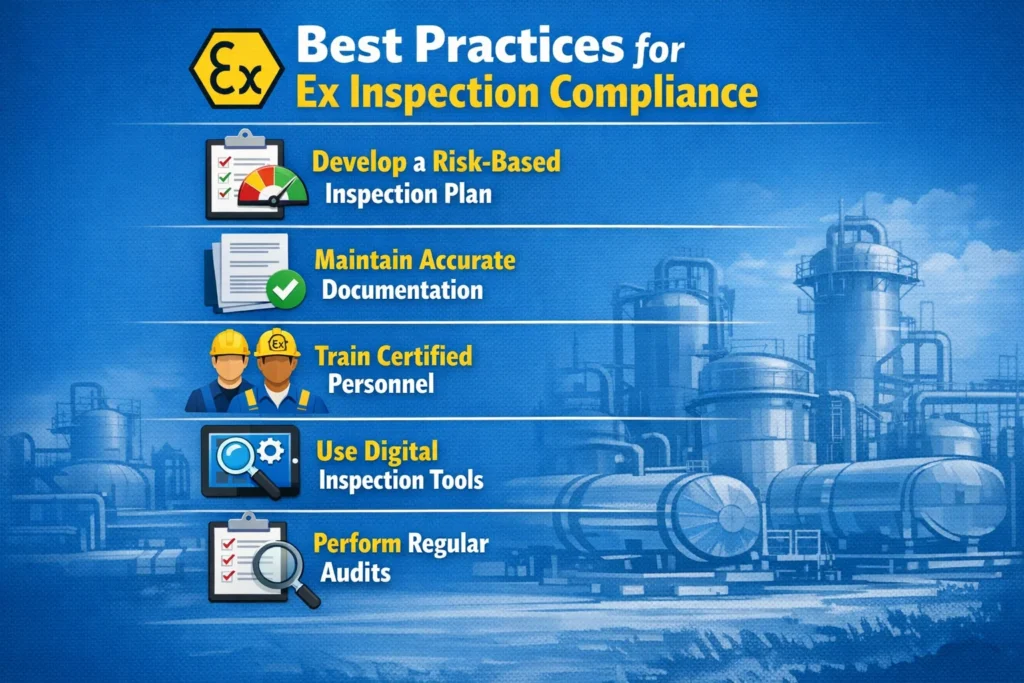
Prioritize high-risk equipment and hazardous zones.
Ensure all inspection records are updated and accessible.
Only qualified inspectors should perform Ex inspections.
Replace spreadsheets with advanced inspection software.
Internal audits help identify gaps before external inspections.
Ex inspection regulations and frequency requirements are critical for ensuring safety in hazardous environments. While standards like IEC 60079 provide clear guidelines, effective implementation depends on consistency, accuracy, and proper planning.
However, manual processes are no longer sufficient. By adopting solutions like Inspections Track, companies can transform their inspection workflows, ensure compliance, and significantly reduce risks.
Ultimately, a proactive and digital-first approach will help your organization stay compliant, efficient, and safe.
Read more : wire rope inspection guide for oil rig cranes
IEC 60079-17 recommends intervals ranging from 6 months to 5 years, depending on inspection type and risk level.
Only competent and certified personnel with knowledge of hazardous area standards should conduct inspections.
It improves accuracy, ensures timely inspections, and simplifies compliance reporting.
Introduction In the oil and gas industry, maintaining quality control and safety is paramount. Quarantine and rejected items can pose significant risks if not managed properly. Proper inspection ensures compliance, prevents accidents, and protects your…
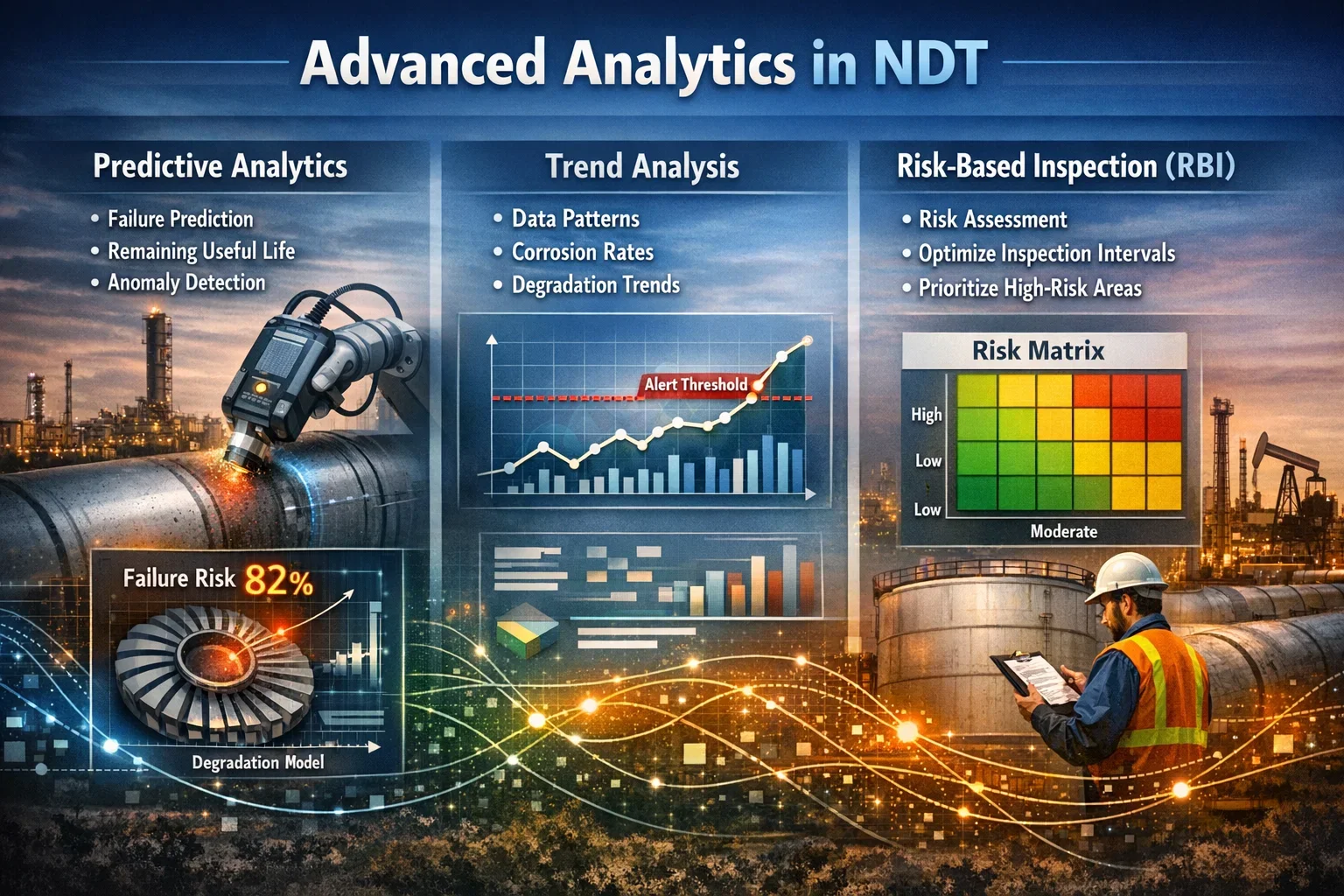
Non-Destructive Testing (NDT) plays a critical role in ensuring the safety, reliability, and compliance of assets in industries like oil and gas. However, simply collecting inspection data is not enough. NDT data analysis is what…


